How Americans define a middle-class lifestyle — and why they can’t reach it
Writing, research, data analysis and chart design by Alyssa Fowers; poll design, execution and analysis by Emily Guskin and Scott Clement; illustration by Dylan Moriarty
After creating Are You Middle Class? and Are You Rich? quizzes, I couldn’t shake the feeling that, when people say “middle class,” they don’t mean a specific income range. The readers who responded to those stories seemed to have an image in mind of a middle class lifestyle, which many felt unable to achieve even with incomes that were solidly middle class according to most researchers.
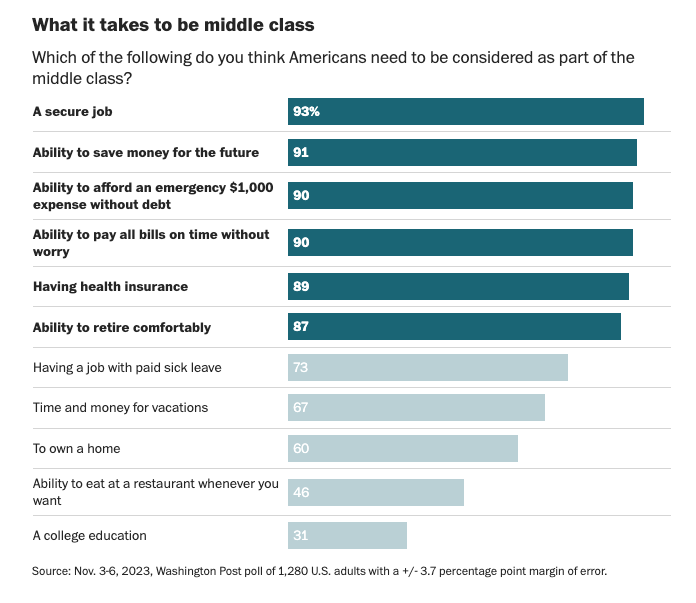
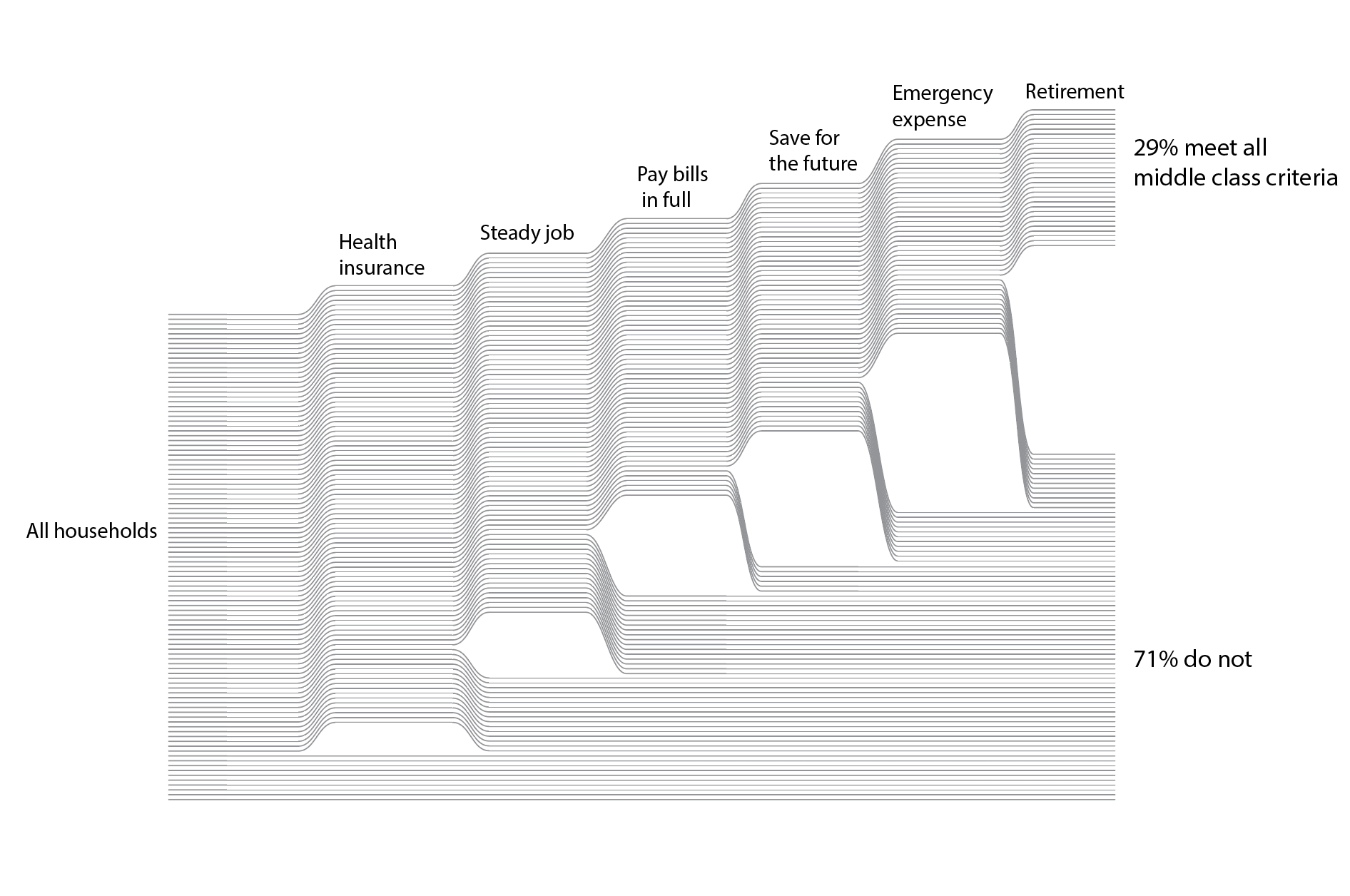
I teamed up with the polling team at The Washington Post to ask a nationally-representative sample of Americans what they thought was necessary to belong to the middle class. There was near-universal agreement on six of the criteria: a secure job, the ability to save money for the future, the ability to afford a $1,000 emergency expense, the ability to pay all bills on time without worry, having health insurance, and the ability to retire comfortably.
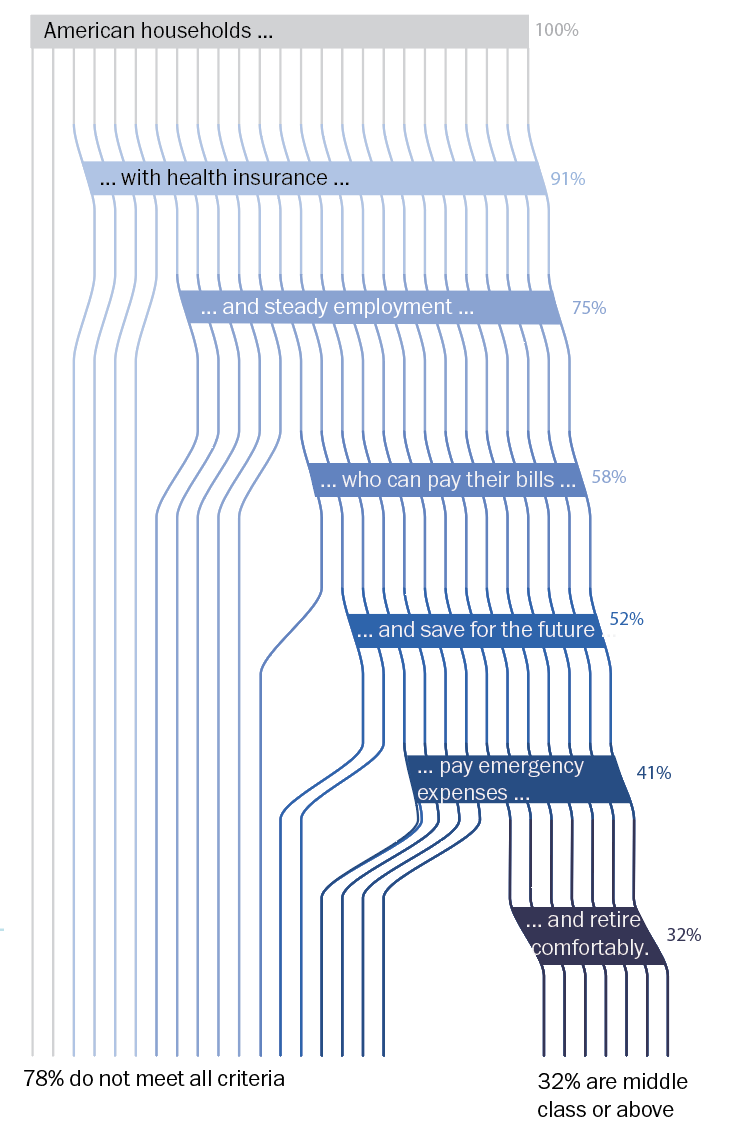
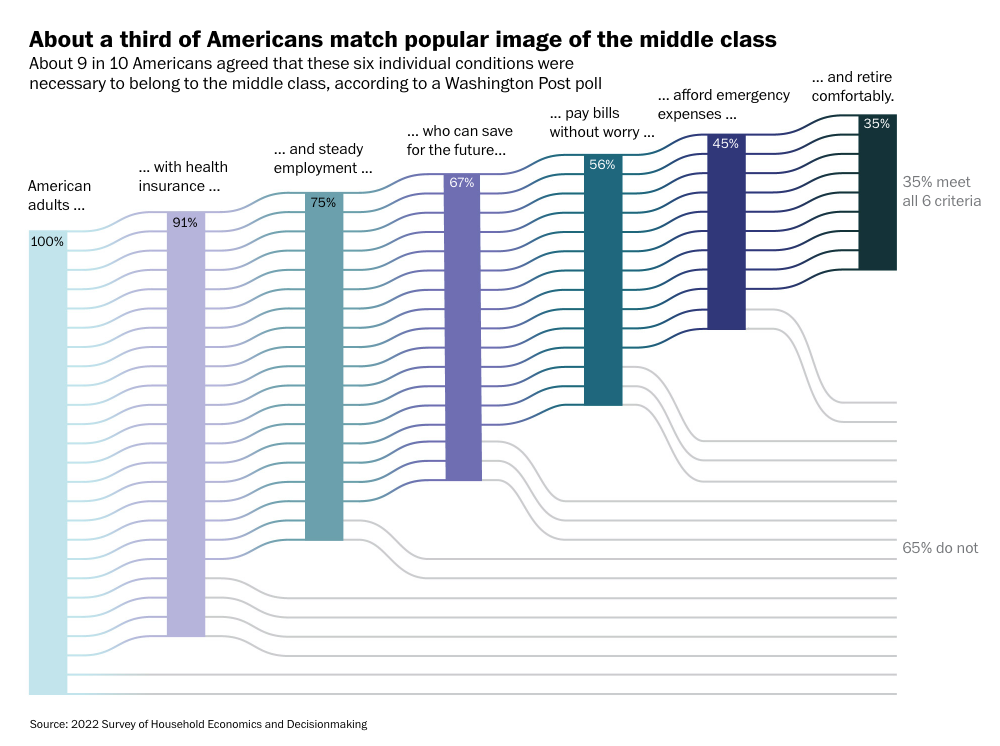
I investigated what share of Americans actually met all 6 criteria by analyzing microdata from the Survey of Household Economics and Decisionmaking. Only about a third of Americans met all of the criteria. Fewer than half of Americans who would be considered “middle income” met all 6.
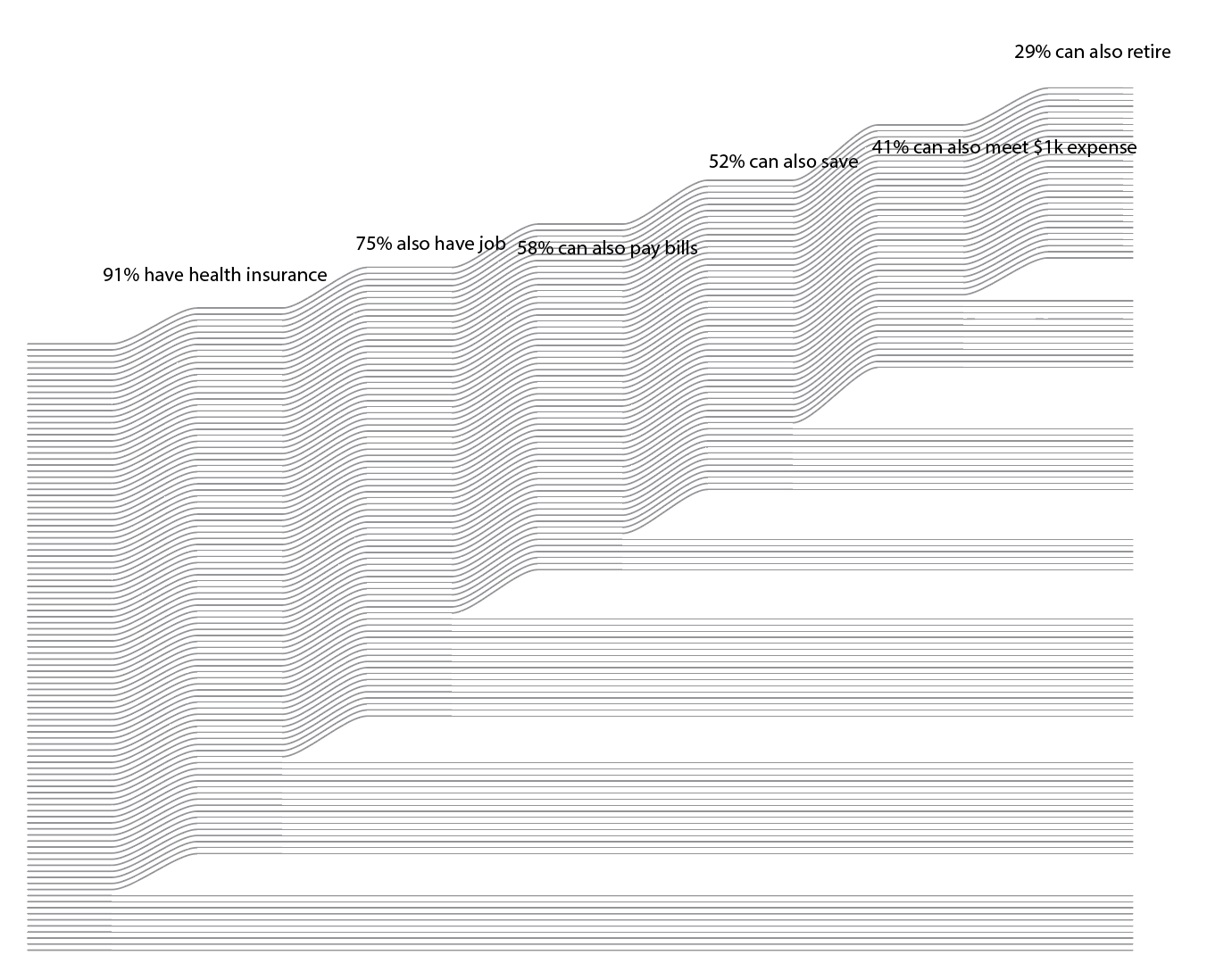
Early versions of the main “quill” chart
Desktop:

Mobile: