The new sick leave law doesn’t help the workers that need it most
An analysis that found only 12% of essential workers would be covered by the sick leave provisions in the Families First Coronavirus Emergency Response Act.
Concept, analysis, graphics, and writing by Alyssa Fowers; illustrations and page design by Shelly Tan
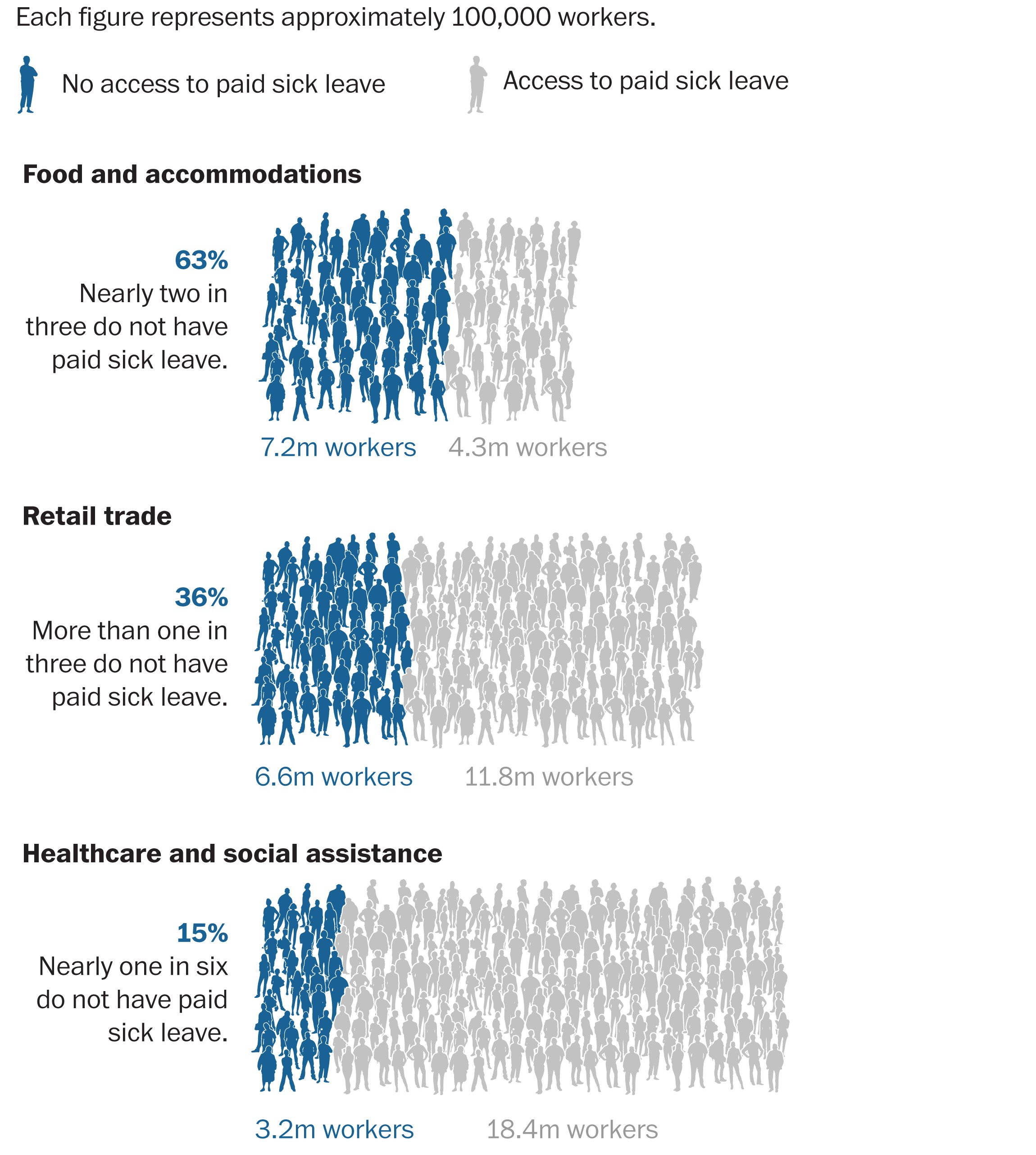
I wrote this story in the early days of the covid-19 pandemic as the U.S. government was just beginning to respond. Originally, it was meant to be an analysis of which workers did and didn’t have paid sick leave. As I dove into the data, I noticed that a prominent research institute had dramatically overestimated how many people the law would help, because their analysis used the wrong variable for business size. I pivoted to estimate what share of workers would actually receive paid sick leave due to the law.
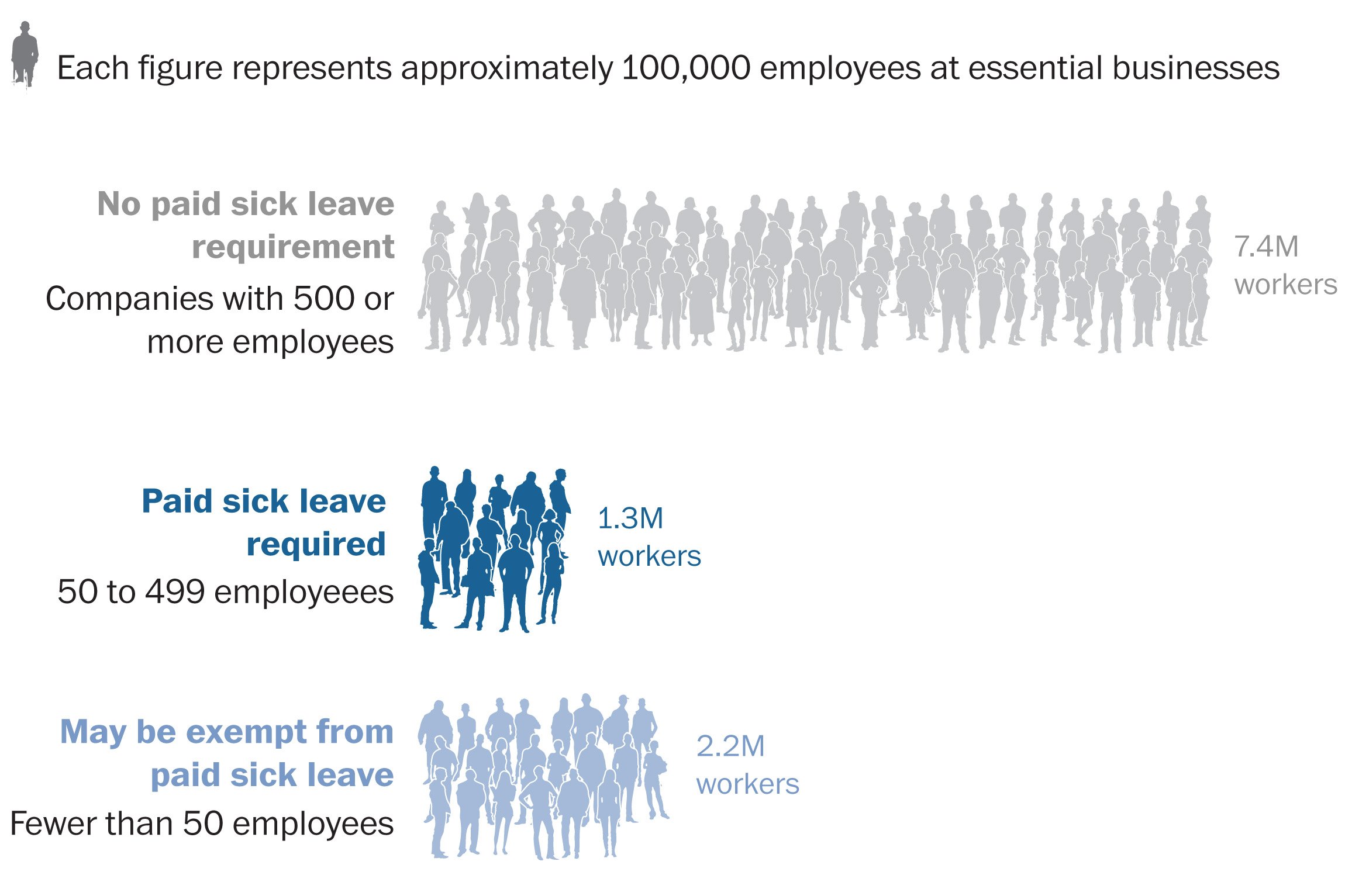
I used one of the earliest official lists of essential businesses to identify relevant industries, then pulled together information from the American Community Survey, Statistics of U.S. Businesses, and the Bureau of Labor Statistics’s Employee Benefits Survey. Through this analysis, I found that only 12% of essential workers would actually be covered by the sick leave provisions in the law because most essential businesses were too big (or too small) to have to comply with the law.
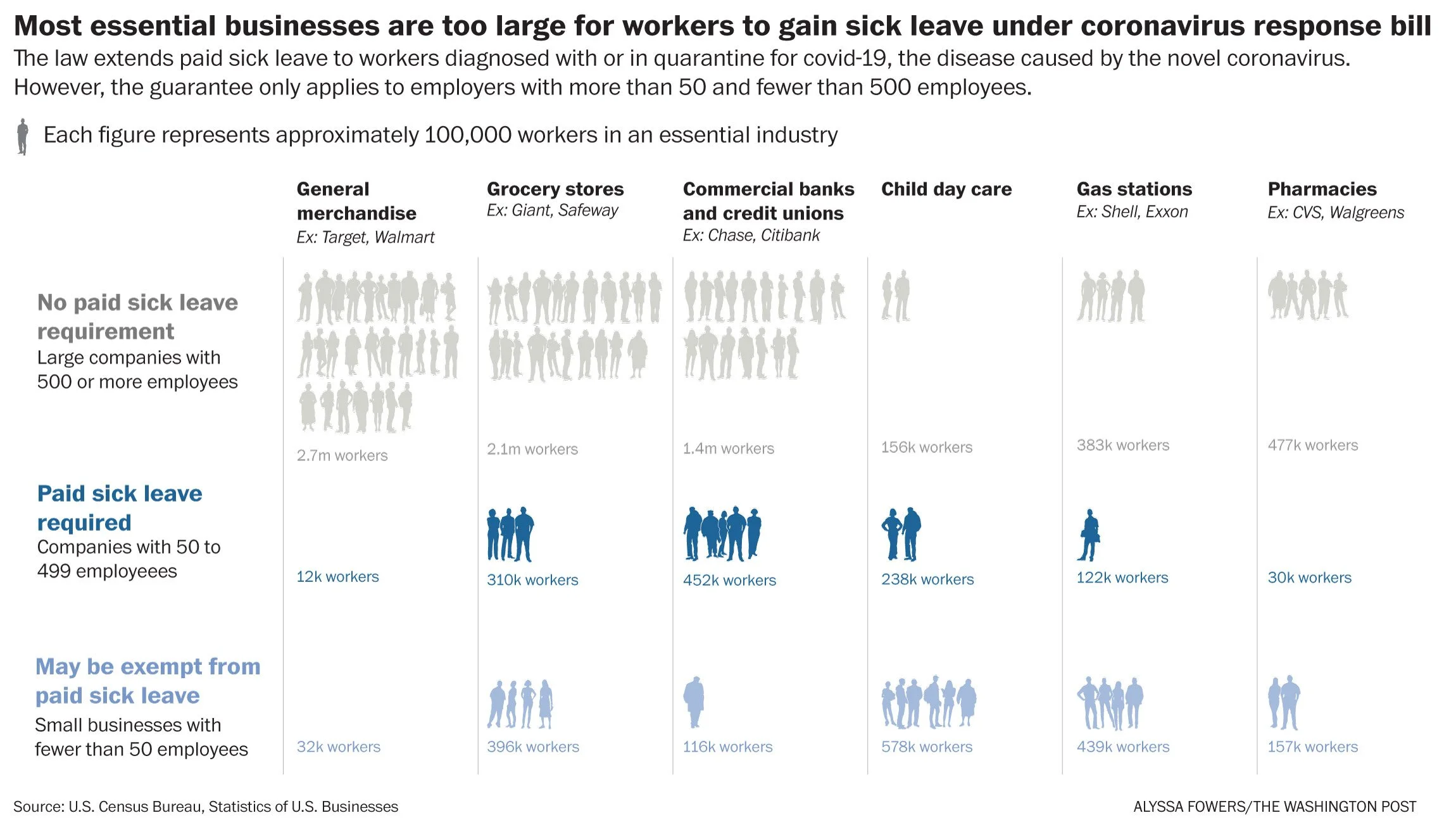
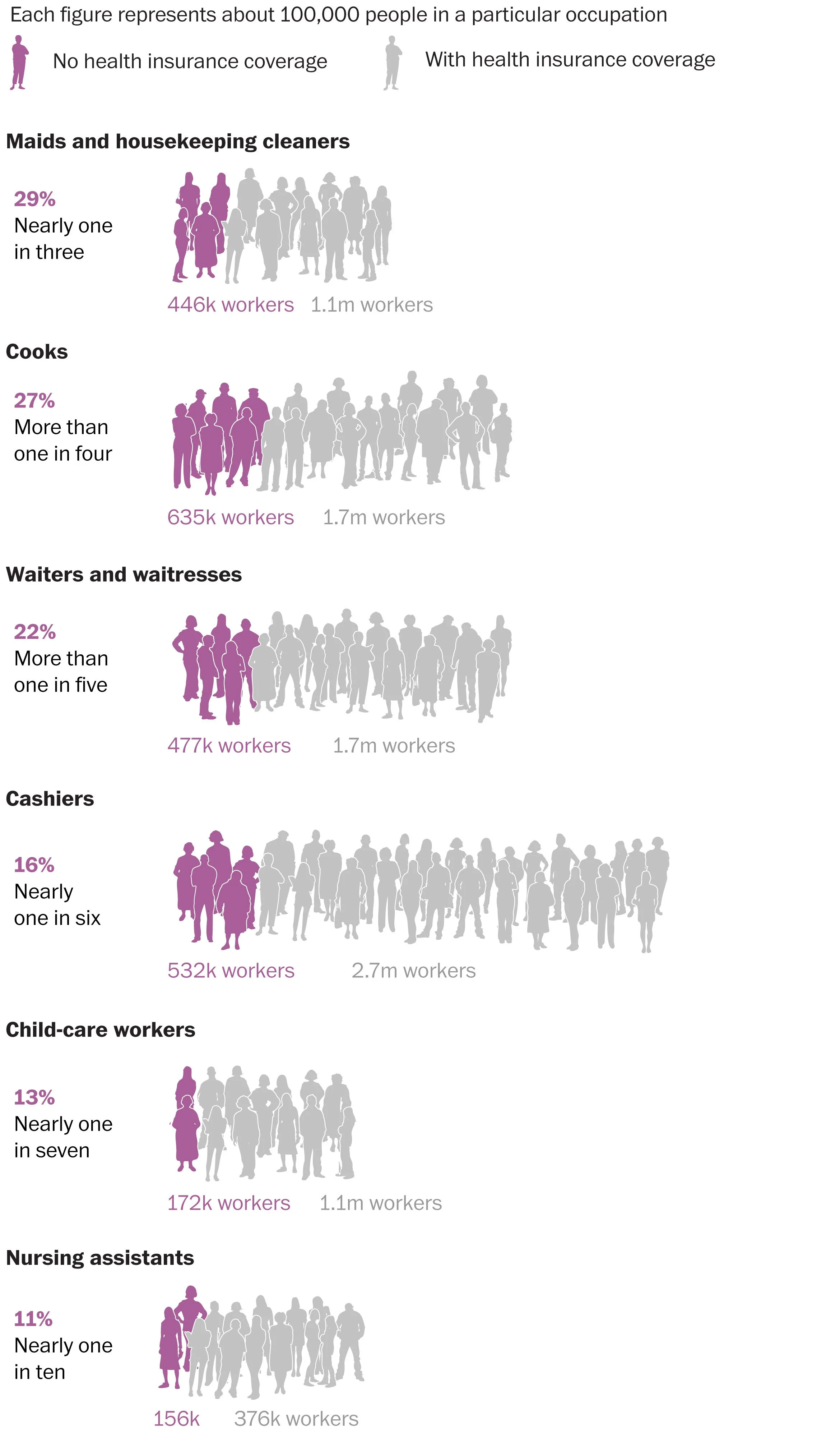
The story also explored how many workers in essential industries already had paid sick leave and health insurance. I used “wee people” rather than more-standard dots or squares to emphasize that these workers were not just numbers. I also took care to make sure the gender ration of the figures in the charts matched the gender ratios of the workers in each industry.