Landlords are accused of colluding to pay rents. See where.
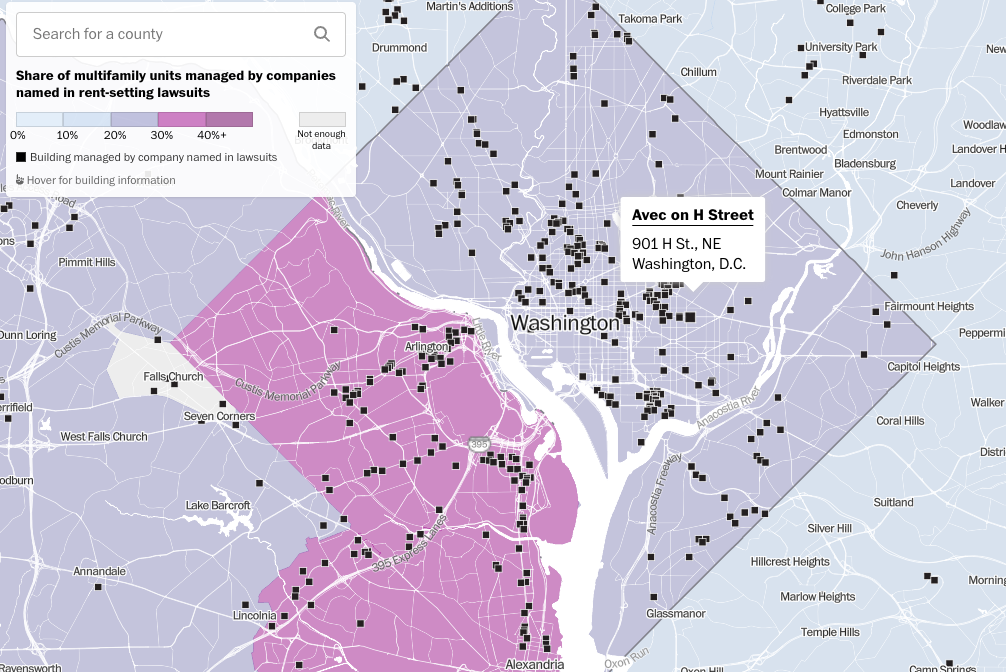
An investigation into the buildings managed by companies accused of using RealPage’s algorithmic rent-setting software, featuring an interactive map where readers could see the buildings in their own neighborhoods and the first estimates of these companies’ market share
Concept, research, data collection, and data analysis by Alyssa Fowers; additional data analysis by Steven Rich; development and design by Szu Yu Chen; writing by Rachel Lerman
When I saw coverage of lawsuits against RealPage in 2024, I realized those lawsuits had concrete details of the companies involved, which I could use to help people find out whether their own neighborhood was affected.
I pulled a list of 52 property management companies named in lawsuits in D.C., Arizona and Nashville, then saved the contents of those companies’ websites to capture properties advertised on their pages. I explored the underlying code in each website and wrote custom scripts with regular expressions in R to create structured data with building names and addresses.
Once I had created the property list, our team investigated what share of the multifamily rental market was managed by these companies in counties across the country. Steven Rich from The Post’s data desk found the number of units in each building; I geocoded every property and summed the units at the county level, comparing them to a suitable baseline from the 2023 American Community Survey.
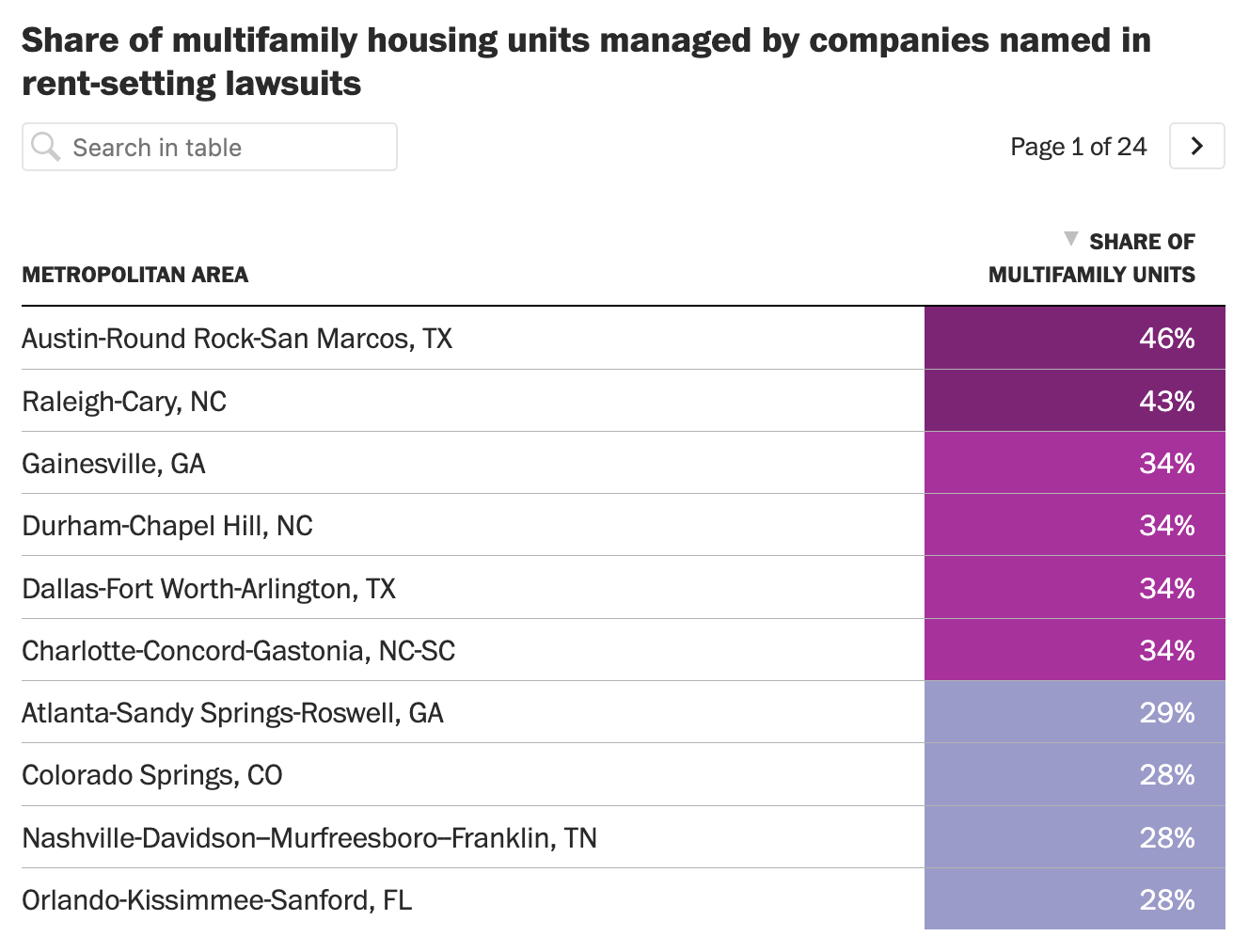
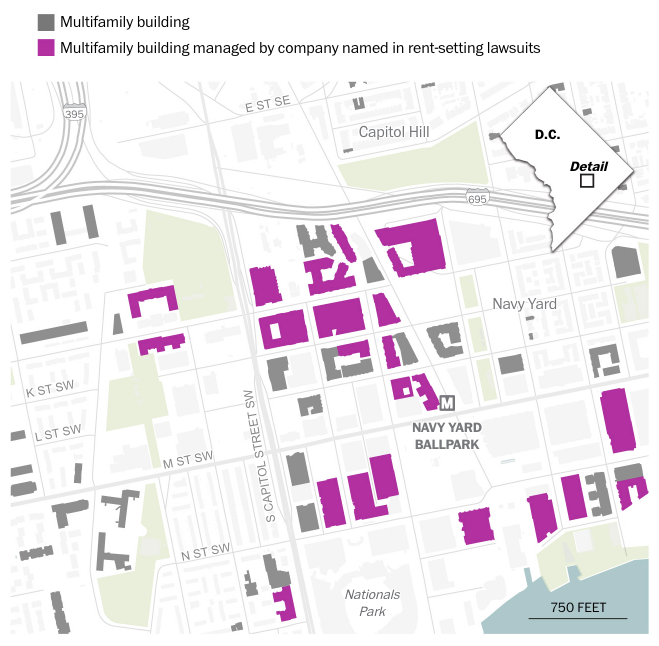
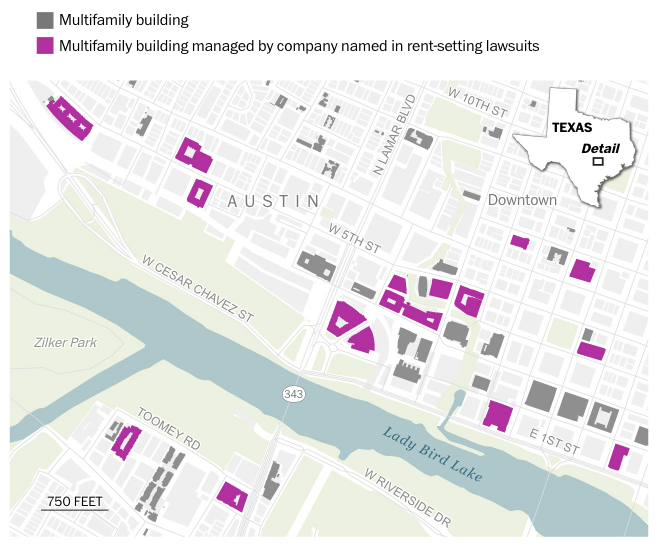
Once I knew which counties had particularly high concentrations of these buildings, I learned to conduct spatial analysis in R to find 1 square mile areas with particularly high numbers of RealPage buildings. From that list, I found building footprint and usage data for the District of Columbia and Austin, Texas so that we could zoom into a neighborhood and show which buildings were multifamily residences, and which of those residences were managed by companies named in the lawsuits.